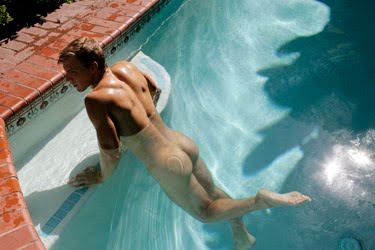
Image: Subject and photographer unknown.

It's the year of the hare! This year we will be licking our wounds and recovering from the fierceness of the year of the tiger. It will be a year of self-reflection and inward journeys.
There's such a huge difference between the gentleness of this Hare or Rabbit year, after Tiger, who has been so powerful. And we ain’t seen nothin’ yet, because Dragon is next year 2012, which will be extremely transformational and positive. So this wonderful, gentle time of the Year of the Hare, we can heal, transform, [use] diplomacy, be kind and pure with each other.
Taste and refinement are valued. Comfort is desired. Money can be made easily but also spent easily because the hare or rabbit loves beauty, luxury or artifice. Remember, Dragon Year 2012 will be very powerful, shamanic, a wild, exhausting time. So appreciate the small pleasures of this Hare Year 2011 as superb and somewhat rare opportunities to heal, relax, entertain, mend fences.
If relationships have been difficult, now would be the time to build those bridges again. Reach out, connect, heal. Make time for family gatherings and comfortable travel. Expect political compromise and diplomatic peacemaking on a global level. Discretion and persuasion are effective in a Rabbit Year, whereas force will not work.
See also the previous posts:
Chinese Year of the Hare
Sign of the East
 Image: Subject and photographer unknown.
Image: Subject and photographer unknown.
 Located in the hinterland of Byron Bay, Australia, the property of “Amileka” comes complete with 360 degree views, an outdoor pool and a giant red hare (or is it a rabbit?).
Awarded “Best Property Australia” in the 2009 CNBC International Property Awards, the 2008 Architecture Award from the Australian Institute of Architects (NSW Country Division), and the 2009 Master Builders Association Regional Award, “Amileka” has been described as an “edgy contemporary home.” When can I move in?
 Image: Subject and photographer unknown.
 Image: Artist unknown.
 Notes Wikipedia:The clade Aplysiomorpha commonly known as sea hares are medium-sized to very large sea slugs with a soft internal shell made of protein. These are marine gastropod molluscs in the superfamilies Aplysioidea and Akeroidea.The common name "sea hare" derives from their rounded shape and from the two long rhinophores that project upwards from their heads and that somewhat resemble the ears of a hare.Sea hares are mostly rather large, bulky creatures. The biggest species, Aplysia vaccaria, can reach a length of 75 centimetres (30 in) and a weight of 2 kilograms (4.4 lb) and is arguably the largest gastropod species.
 Sea hares have soft bodies with an internal shell, and like all opistobranch mollusks they are hermaphroditic. Unlike many other gastropods, they are more or less bilaterally symmetrical in their external appearance. The foot has lateral projections, or "parapodia."Sea hares are herbivore/herbivorous, and are typically found on seaweed in shallow water. It seems to be the case that some young sea hares are capable of burrowing in soft sediment leaving only their rhinophores and mantle opening showing. Sea hares have an extremely good sense of smell. They can follow even the faintest scent using their rhinophores, which are extremely sensitive chemoreceptors.Their color corresponds with the color of the seaweed they eat: red sea hares have been feeding on red seaweed. This camouflages them from predators. When disturbed, a sea hare can release ink from its ink glands, providing a potent deterrent to predators. This release acts as a smoke screen, while at the same time, adversely affecting the smell sensors of their predators. In a small environment, this ink could be toxic to the inhabitants. The color of the ink is white, purple or reddish, depending on the color of the pigments in their seaweed food source. Their skin contains a similar toxin that renders sea hares largely inedible to many predators.
 Some sea hares can employ jet propulsion as a locomotory method, although without the sophisticated cognitive machinery of the cephalopods their motion is somewhat erratic.Image 1: GetAHugeTank.com.
Image 2: ColdWaterImages.com.
Image 3: Zazzle.com.
 Image: Subject and photographer unknown.


 Sea hares have soft bodies with an internal shell, and like all opistobranch mollusks they are hermaphroditic. Unlike many other gastropods, they are more or less bilaterally symmetrical in their external appearance. The foot has lateral projections, or "parapodia."
 Some sea hares can employ jet propulsion as a locomotory method, although without the sophisticated cognitive machinery of the cephalopods their motion is somewhat erratic.